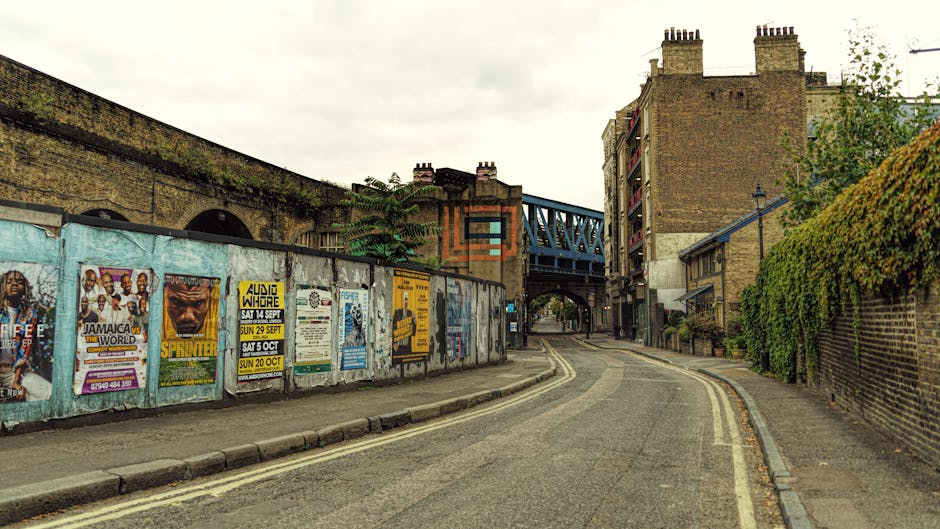
Clapham Road Removals Guide: Narrow Access Solutions That Actually Work
Clapham Road moves can be straightforward on paper and then, the moment the van arrives, everything gets a bit tighter, a bit noisier, and a lot more awkward. A narrow stairwell, a second-floor flat with no lift, a shared entrance, a low kerb, or a parking spot that disappears five minutes before loading can turn an ordinary removal into a careful planning job. This Clapham Road removals guide narrow access solutions is here to help you think ahead, avoid the usual headaches, and make the move feel manageable rather than chaotic.
Whether you are moving out of a compact flat, shifting furniture through a tight hallway, or organising a business relocation with limited street access, the good news is that narrow access is rarely a deal-breaker. It just needs the right method. Below you will find practical steps, real-world tips, and the kind of detail that saves time on moving day. And yes, some of it is just about not trying to be a hero with a wardrobe that clearly should have been measured first.
Why Clapham Road removals guide narrow access solutions Matters
Clapham Road and the streets around it often mix older building layouts with busy London traffic, controlled parking, and the sort of access that looks fine until a sofa is halfway through the door. Narrow access matters because every extra metre, stair turn, and waiting minute can affect the safety, speed, and cost of the move.
When access is tight, the usual removal plan may not be enough. A large vehicle might not fit where you want it to stop. A bulky item may not turn on a landing. A lift may be too small, or not available at all. You can see where this goes. Suddenly, the move becomes less about lifting and more about sequencing, measurement, patience, and not scratching the bannister that has somehow survived for decades.
Getting the access plan right is especially important if you are moving at a busy time of day, trying to avoid disturbing neighbours, or working to a fixed handover deadline. A good plan reduces the chance of delays, protects your belongings, and lowers the risk of damage to walls, doors, floors, and furniture.
Practical takeaway: on a narrow-access move, preparation is not a nice extra. It is the move.
How Clapham Road removals guide narrow access solutions Works
Narrow access solutions work by breaking the move into smaller decisions. Instead of assuming a standard van-and-load process, the route, vehicle size, lifting method, packing style, and timing are all matched to the property's real conditions.
Here is the basic idea in plain English:
- Assess the access first. Measure doorways, halls, staircases, and any turning points.
- Match the vehicle to the street. A smaller van or a more flexible loading plan may be better than a large truck.
- Prepare items for easier handling. Flat-pack where possible, remove feet, shelves, or handles if safe to do so.
- Plan the loading order. Things needed last should go in first, and fragile items should be staged carefully.
- Build in time for awkward pieces. A wardrobe corner or large mattress can need a slightly different route than everything else.
In many narrow-access moves, the real win is not brute strength. It is reducing friction. Fewer turns, fewer trips, fewer things that need to be carried at shoulder height while someone holds a door open and a neighbour asks if you are nearly finished. Truth be told, that's half the battle.
If you are comparing broader moving support, it can help to look at general removal services alongside more specific options such as man and van support or flat removals depending on your property type and load.
Key Benefits and Practical Advantages
Done properly, narrow access planning brings very tangible benefits. Some are obvious. Some only become obvious after a move has gone badly once or twice.
- Less damage risk: careful route planning reduces scrapes, knocks, and corner damage.
- Faster loading and unloading: when the route is chosen well, there is less hesitation and fewer dead ends.
- Better use of labour: you spend less time carrying the same item twice because it would not fit the first way.
- Lower stress on the day: a solid plan keeps everyone calmer, which really does matter.
- More suitable vehicle choice: not every move needs a big truck; sometimes a smaller van is the smarter fit.
- Cleaner coordination with neighbours and parking: tight streets reward timing and politeness. London knows this well.
There is also a commercial benefit. If you are moving a small office or a rental flat with a quick turnaround, narrow access planning can help you avoid added hours and awkward delays. For business moves, that can make a noticeable difference to disruption, especially if you are pairing logistics with office removals or a broader commercial moves schedule.
Who This Is For and When It Makes Sense
This guidance is useful for anyone moving in or around Clapham Road where access is less than generous. In practice, that includes a lot of people:
- tenants moving in or out of upper-floor flats
- homeowners with side returns, narrow staircases, or tight front doors
- students moving from compact shared housing
- small businesses relocating from older terrace-style buildings
- landlords arranging quick turnover between lets
- anyone with large furniture and limited clearance
It makes sense whenever the route from property to vehicle is not simple. That might mean a long carry to the road, a basement flat, or a staircase with two bends and a landing that politely refuses to cooperate. If you are not sure whether your access is actually narrow enough to matter, ask yourself one question: would you be comfortable carrying your biggest item through the space without turning it at an angle? If the answer is "not really", you probably need a plan.
For smaller moves, a more flexible vehicle setup may be enough, and you might find that man with van style support is a better fit than a larger lorry. For student moves, there is often an especially good case for student removals, simply because the loads are usually lighter but the access can still be awkward.
Step-by-Step Guidance
Here is a practical way to approach a narrow-access move without overcomplicating it.
- Measure the tricky bits. Check door widths, hallway corners, stair turns, and any lift dimensions. Measure the largest items too, not just the obvious ones.
- Check the street and loading point. Look at whether there is legal stopping space, a safe unloading area, and enough room for a van to position without blocking everything.
- Identify awkward items early. Wardrobes, beds, sofas, desks, and appliances are the usual suspects. These need route planning before moving day, not during it.
- Decide what should be dismantled. Flat-pack furniture often travels better in pieces. Do not dismantle something unless you are sure you can rebuild it.
- Pack to suit the route. Use smaller, well-sealed boxes for awkward stairs or long carries. Overfilled boxes are a nuisance. Heavy, overfilled boxes are a punishment.
- Reserve the right moving support. A standard house move team may be ideal, but some properties work better with a smaller van or targeted lifting help.
- Protect the property. Floor runners, door protectors, and careful corner handling make a big difference in older buildings.
- Agree the move order. Decide what comes out first, what stays until the end, and which item is most likely to need a second attempt. That last part happens more often than people admit.
If packing is still on your to-do list, packing and boxes support can take a lot of pressure off the run-up to moving day, especially when time is tight.
Expert Tips for Better Results
A few small habits make narrow-access removals smoother. They are not glamorous. They just work.
- Use tape on the floor for measurements. A quick visual guide often reveals whether something will turn cleanly or snag at the corner.
- Keep one route clear from the start. Even a brief pile-up of shoes, bags, and loose packaging can trip the whole process.
- Protect vulnerable surfaces before the team arrives. It sounds obvious, yet people often wait until the first scrape. Too late then.
- Prioritise the heaviest items first. If a large item is likely to be the hardest part of the day, tackle it when everyone is fresh.
- Have a backup parking idea. On a street like Clapham Road, the first plan may disappear because another vehicle has beaten you to the space.
- Leave a little breathing room. A move always feels better when there is time to pause, adjust, and try the angle again.
A quick aside: people often worry that narrow access means the move will be messy or complicated. Often it is the opposite. When the access is known in advance, the job becomes more controlled, even if it looks intimidating at first glance.
For heavy or delicate items, especially antiques or upright instruments, it may be worth looking into piano removals or dedicated furniture removals if the items need specialist handling. Not every chair needs a specialist. Some do.
Common Mistakes to Avoid
Most narrow-access problems are predictable. That is the slightly annoying part. The good news is that predictable problems are easier to avoid.
- Not measuring properly. "It should fit" is not a measurement. It is a hope.
- Ignoring staircase geometry. Straight dimensions are only half the story. Turns matter just as much.
- Leaving parking until the morning of the move. By then, the available space is often gone.
- Trying to move oversized furniture intact. If it has to be twisted hard to pass a door, it probably needs dismantling or a different route.
- Overpacking boxes. Heavy boxes are harder to carry through tight spaces and more likely to split.
- Forgetting building access rules. Some blocks have times, entry procedures, or shared-space expectations that you need to respect.
- Booking a vehicle that is too large. Bigger is not always better in narrow streets. Sometimes it is just more annoying.
One of the most common mistakes is assuming the team will figure it out on arrival. Skilled movers can adapt, of course, but the best outcome usually comes from giving them good information in advance.
Tools, Resources and Recommendations
You do not need a van full of gadgets to manage a narrow-access move, but a few tools are very useful.
| Tool or resource | Why it helps | Best used for |
|---|---|---|
| Measuring tape | Confirms door widths, hallway turns, and furniture dimensions | Planning routes before move day |
| Furniture sliders | Helps shift heavy items on smooth floors with less strain | Large furniture in flats or houses |
| Blankets and wraps | Protects surfaces from scrapes and knocks | Doors, tables, cabinets, white goods |
| Floor protection | Reduces marks on hallways and stair runs | Older properties or freshly decorated homes |
| Smaller packing boxes | More manageable through narrow passages | Books, kitchen items, mixed household goods |
| Good photos of the access route | Helps the removals team assess staircases, entrances, and loading points before arrival | Any move with uncertain access |
For people who prefer a more hands-off approach, full home moves support can be the calmer option, especially if the move involves several awkward items and a tight schedule. If you need temporary overflow space, storage can also reduce pressure by letting you move in stages rather than all at once.
Law, Compliance, Standards, or Best Practice
With removals, compliance is usually about good practice, safety, and respecting property and public space. It is not the glamorous part of moving, but it matters.
In the UK, safe lifting, sensible vehicle loading, and careful handling of people's property are all standard expectations. If a move involves shared access, common parts, or public pavements, it is wise to think about neighbour access, building rules, and whether any temporary stopping arrangement is needed. Local parking or loading restrictions may apply, so a realistic plan beats a hopeful one.
From a safety point of view, the practical goal is simple: avoid unnecessary strain, reduce trip hazards, protect surfaces, and keep the route clear. Good movers will usually work methodically, use the right protective materials, and avoid forcing items through spaces that are too tight. That's basic professionalism, really.
If you want reassurance around service standards, it is worth reviewing a company's health and safety policy, insurance and safety information, and terms and conditions before booking. For payment confidence, some people also like to check payment and security details. None of this is exciting, but it is sensible.
Options, Methods, or Comparison Table
Not every narrow-access move needs the same approach. Here is a simple comparison to help you choose the right one.
| Approach | Best for | Pros | Limitations |
|---|---|---|---|
| Smaller van with flexible loading | Compact flats, short carries, tight streets | Easier parking, easier access, less street disruption | May require more trips for larger loads |
| Full removal team | House moves, larger contents, mixed furniture | More lifting capacity, better for awkward items | Needs more coordination and may be less nimble in very tight streets |
| Partial dismantling and reassembly | Bulky furniture through narrow halls or stairs | Improves fit and lowers damage risk | Requires time, tools, and confidence |
| Staged move with storage | Homes with severe access limits or timing gaps | Reduces pressure on move day, keeps the process controlled | Needs extra planning and another handling stage |
For a quick, light load, a removal van may be ideal. For larger loads, a moving truck or even removal truck hire may suit if the street access allows it. The right answer depends less on the postcode and more on the reality of the building.
Case Study or Real-World Example
Imagine a third-floor flat on or near Clapham Road with a narrow stairwell, a sharp turn at the bottom landing, and a sofa that looked manageable in the showroom but suddenly feels enormous in a Victorian hallway. The move date is a Saturday morning, the street is active, and there are only a few sensible loading spots. Classic London scene, really.
In that situation, the best plan is usually to:
- measure the sofa and the stair angles in advance
- confirm which pieces can be removed safely, such as feet or cushions
- use protective covers on the sofa and banister
- arrange the van so loading happens in one clean run
- keep the route clear from the front door to the vehicle
If the sofa still will not make the turn, then the team can change approach rather than forcing it. That may mean a different angle, a temporary pause to adjust grips, or dismantling a more awkward item instead. The important part is that the problem is discovered on the planning call, not with everyone sweating on the landing.
We have seen moves where one careful decision early on saved an hour and spared a doorway from a nasty scrape. Small thing, big difference.
Practical Checklist
Use this before the move. It keeps the day far less messy.
- Measure doors, hallways, staircases, and lifts
- Measure the largest furniture and appliances
- Take photos of entrances, stairs, and loading areas
- Confirm parking and stopping options
- Decide what needs dismantling
- Pack heavy items into smaller boxes
- Label boxes by room and priority
- Protect floors, corners, and door frames
- Keep access routes clear inside the property
- Check whether storage is needed for staged moving
- Review insurance and safety details
- Make sure everyone knows the move order
If you are moving out of a smaller property or handling a mixed load, it may also help to compare removals with house removals or even house removalists depending on how much help you want on the day.
Get a free quote today and see how much you can save.
Conclusion
Clapham Road moves are often completely manageable once narrow access is treated as a planning issue rather than a problem to panic about. Measure properly, choose the right vehicle, protect the property, and give the move a little more structure than you might for a simple drive-up loading job. That is usually where the difference lies.
The best narrow-access removals feel calm because someone did the quiet work beforehand. No drama, no forced furniture, no last-minute improvising in the rain. Just a move that gets done cleanly and with less stress than you feared.
If you are weighing up support for a tight-access move, start with the access facts, then match the service to the job. That simple approach tends to hold up well in the real world. And once the last box is inside, the kettle goes on, and the front door finally closes, it all feels a bit better, doesn't it?
Frequently Asked Questions
What counts as narrow access on Clapham Road?
Narrow access usually means the route from property to vehicle has tight staircases, limited hallway space, awkward corners, restricted parking, or a small loading area. It does not have to be extreme to matter.
How do I know if my sofa will fit through the stairwell?
Measure the sofa at its widest point, then measure the narrowest parts of the stair route, including turns and landings. If the item has to be twisted sharply, you may need dismantling or an alternate route.
Is a smaller van always better for narrow streets?
Not always, but it often helps with parking and positioning. The best choice depends on the size of your load, the stopping space available, and whether you need multiple trips.
Should I dismantle furniture before the move?
If an item is bulky, awkward, or likely to snag on a turn, dismantling can be a smart move. Just make sure you keep all fixings together and know how it goes back together again. That part matters more than people expect.
What should I do if parking is difficult outside my property?
Plan your loading point in advance, consider time restrictions, and allow for a backup option nearby. On a busy London road, parking can change quickly, so having a fallback is sensible.
Can narrow access moves be done on the same day?
Sometimes, yes. It depends on the size of the load, the time available, and whether the access challenges are already understood. A well-prepared small move is far more likely to work as a same-day job than a large, unmeasured one.
Is specialist help worth it for a small flat move?
Often, yes, if the access is awkward or the furniture is heavy. A small property can still produce a big logistical headache. The flat size does not always match the difficulty.
How can I protect walls and floors during a tight move?
Use floor runners, corner protection, padded covers, and careful routing. The aim is to remove friction points before they become scuffs or knocks. Prevention is much easier than repair.
What if my building has a lift but it is too small?
Then you treat it as a stair move and plan accordingly. A lift that almost fits is not the same as one that works safely. It is better to know that early than find out with a mattress trapped halfway inside.
Do I need storage if access is very difficult?
Not always, but storage can help when you need to move in stages, wait for a handover, or reduce the amount of furniture crossing a tight route on one day. It is especially useful when timing is a bit messy.
What kind of move support is best for a student flat with narrow access?
For student moves, a smaller, flexible service is often enough, especially if the load is mainly boxes, bedding, and a few pieces of furniture. If the route is awkward, though, the access still needs proper planning.
How far in advance should I assess access before moving?
As early as possible. A few days can be enough for a small move, but the more awkward the property, the earlier you should check measurements, parking, and route details.
What is the biggest mistake people make with narrow access moves?
The biggest mistake is assuming the move will sort itself out on the day. It usually does not. A little planning up front saves time, stress, and the odd painful moment trying to pivot a wardrobe around a bend that clearly hates you.