Recycling and Sustainability for Removals Stockwell
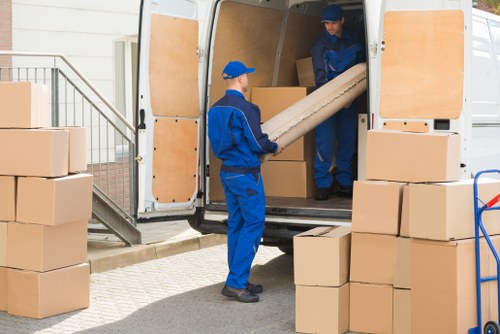 At Removals Stockwell, sustainability is built into the way each clearance and move is planned. From careful sorting to route optimisation, the aim is to keep useful materials in circulation and reduce what ends up in landfill. Our removals service in Stockwell is designed to support greener moving practices across local homes, flats, and commercial spaces, with a clear focus on responsible recycling and lower-emission transport.
We work toward a recycling percentage target of 90% for suitable non-hazardous items collected through our operations, using reuse first, then recycling, and disposal only as a last resort. This target helps shape how our team handles furniture, metals, wood, cardboard, textiles, WEEE items, and mixed household materials. In a busy inner-London area like Stockwell, where collections often involve a blend of bulky waste and everyday packaging, that approach supports a cleaner and more efficient service.
As part of our Stockwell removals and recycling activity, we separate items before they leave the property wherever possible. That means identifying recyclable paper and cardboard, setting aside reusable furnishings, and keeping metals and electricals apart from general waste. The boroughs around Stockwell have increasingly practical waste-separation expectations, so our processes are designed to align with local sorting habits and transfer-point requirements, making it easier for materials to be recovered properly.
 Local processing is central to our environmental approach. We use local transfer stations and licensed waste facilities in and around South London to minimise travel distance and improve handling efficiency. By choosing nearby transfer routes, our Stockwell removals company can reduce unnecessary mileage while ensuring materials are directed to the right recovery streams. This local-first method supports better accountability and helps keep the carbon footprint of each job lower.
In practice, this means a typical move can involve multiple waste streams being directed to specialist facilities. Cardboard may be baled for paper recovery, timber may be separated for onward processing, and scrap metal can be sent to dedicated recyclers. Where suitable, clean reusable goods are diverted before any recycling stage, which reflects the broader London emphasis on waste hierarchy planning: reuse, recycle, recover, and only then dispose.
We also pay attention to neighbourhood-specific waste patterns. Stockwell’s mix of Victorian terraces, mansion blocks, and compact flats often produces packaging, small appliances, broken shelving, old soft furnishings, and renovation leftovers in smaller, frequent batches. Handling these correctly is important because mixed loads can easily contaminate good recyclables. Our team therefore sorts with care, helping ensure that what can be separated, is separated.
 Charitable reuse is another important part of our sustainability work. We have partnerships with charities and reuse organisations that can accept suitable furniture, homeware, and other usable items. When an item is still in good condition, we prioritise donation over recycling. This extends the life of the product and provides practical support to community groups, which is especially valuable in a high-turnover area where many residents are replacing items during moves.
Our recycling-focused removals in Stockwell can therefore include a careful triage stage: one pile for donation, one for recycling, and one for responsible disposal. Sofas with structural damage may be sent for material recovery, while intact tables, chairs, mirrors, bookshelves, and kitchenware can often be reused. This way, the environmental benefit is twofold: less waste is created, and fewer new items need to be manufactured.
We also support the recycling of household items that require special handling. Electricals, cables, batteries, and certain metal fittings are kept out of mixed waste, then transferred to the correct recovery channels. This is particularly relevant in London boroughs where waste separation is increasingly detailed and residents are encouraged to sort items more carefully. By mirroring those expectations, our service helps make each collection more compliant and more sustainable.
 Transport is another major part of our green commitment. Our low-carbon vans are chosen to reduce fuel use and emissions while still carrying the loads required for local removals and clearances. Efficient vehicle planning, smart routing, and fewer wasted journeys all contribute to a lighter environmental impact. For a service that regularly moves across Stockwell, Clapham, Brixton, Kennington, and nearby districts, that matters.
These vehicles are supported by route planning that avoids unnecessary idling and helps consolidate journeys where possible. When a load is sorted accurately in advance, the van can carry only what is needed, making each trip more efficient. In a city setting, even modest gains in fuel efficiency can make a meaningful difference across many jobs, especially when combined with local transfer stations and reuse partnerships.
The result is a removals service in Stockwell that is more than just a transport solution. It is a structured sustainability process that reduces waste, supports charities, and keeps recyclables moving into appropriate recovery streams. Whether the job involves a small flat clearance or a larger house move, our team applies the same environmentally conscious standards from start to finish.
 Sustainability is not a separate add-on for Removals Stockwell; it is part of the service itself. By aiming for a 90% recycling target, using local transfer stations, working with charities, and operating low-carbon vans, we help make moving and clearance work cleaner and more responsible. That approach fits well with the wider London drive toward better reuse, stronger sorting, and lower waste overall.
For residents and businesses looking for Stockwell removals and recycling support, this means fewer items sent to landfill and more materials given a useful next stage. It also means clearer handling of mixed waste, better separation of recyclable materials, and a practical contribution to a more circular local economy. Responsible moving can be both efficient and environmentally aware, and that is the standard we aim to maintain across every job.